

Finding the Pisces constellation in the night sky isn’t hard. You can see it even without a telescope–just know a few reference stars. When you look up, you’ll spot two fish connected by an invisible cord, quietly shimmering in the dark. Their position is revealed by bright neighbors – Pegasus, Andromeda, and Aquarius. Not sure how to start? This guide will teach you how to recognize Pisces step by step and discover one of the most poetic shapes in the night sky.
Pisces Constellation – What It Is and Where to Find It
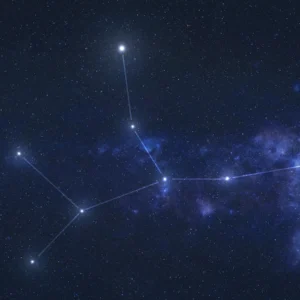
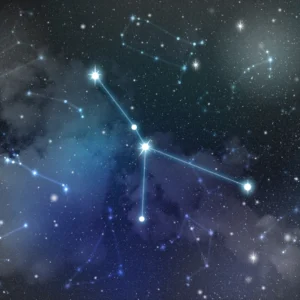
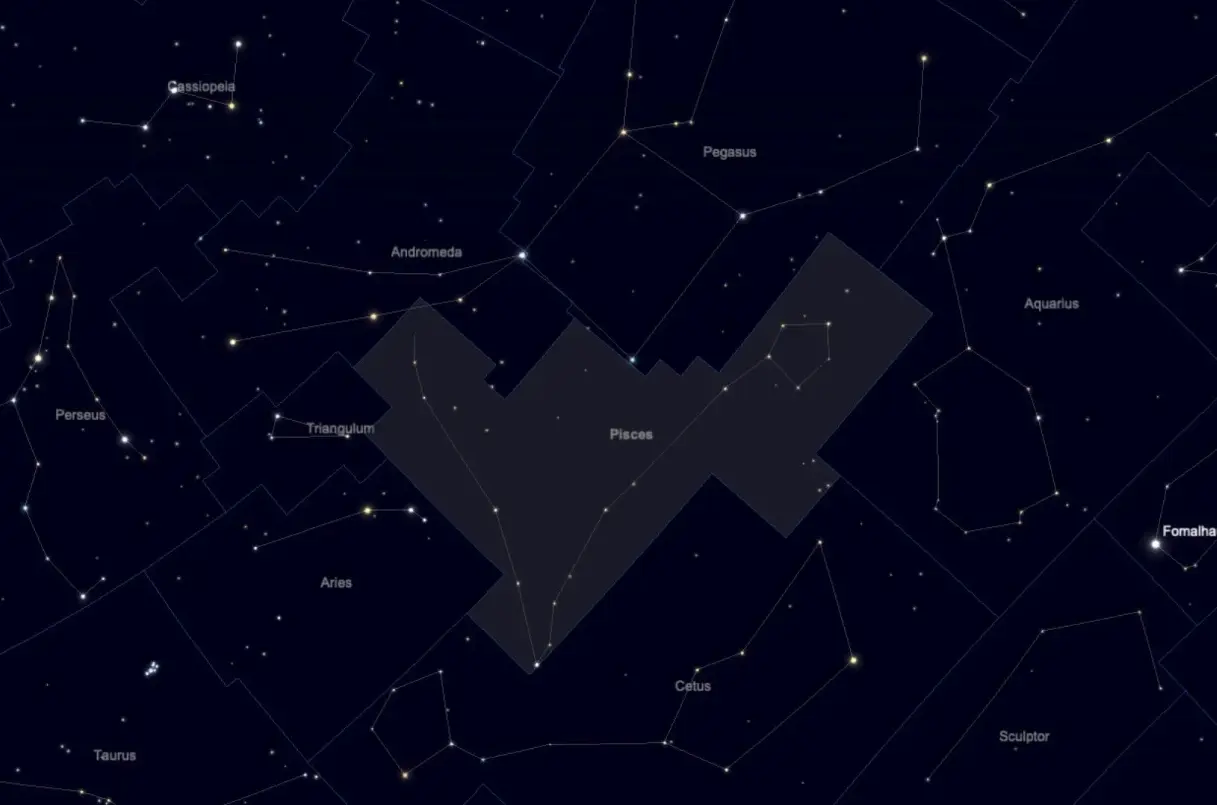
The Pisces constellation lies between Aquarius and Aries and belongs to the zodiac family. It’s moderately faint so that city lights can wash it out, but under a dark sky, Pisces reveals a stretched shape with a “knot” at Alrescha (α Psc). It’s quite large, so don’t try to fit it all in one view – explore it piece by piece.
The best visibility occurs in autumn and early spring, from September to November and from February to April. During these months, Pisces sits higher above the horizon and stays visible longer after dusk. The “Square of Pegasus” serves as your main landmark, located south–southeast of the zenith. From there, fainter stars form chains leading into Pisces’ “body.”
Near Pisces are Pegasus, Andromeda, and Aquarius – your navigation partners. Remember this geometry: the Pegasus Square, a curve of stars toward Alrescha, and then two branching lines. This pattern will help you find Pisces even without a star map.
When and How to Observe Pisces: Best Conditions, Season, and Location
The best time to look for Pisces is in autumn on moonless nights outside the city. Light pollution is the biggest obstacle, so choose a dark area and let your eyes adjust for 15–20 minutes. Then the constellation’s shape will emerge clearly.
The peak season is October–November, but you can also try from February to April if skies are clear. Watch the Moon’s phase – its bright light can hide Pisces. It’s better to have 30 minutes of good darkness than two hours under streetlights.
If you have 7×50 or 10×50 binoculars, bring them along to make the search easier.
Quick tips:
- choose a dark location away from streetlights;
- start 60–90 minutes after sunset;
- use the Pegasus Square as your starting point;
- follow the line toward Alrescha;
- give your eyes time to adapt.
After that, look up again without your phone or flashlight and check if you can “read” the constellation on your own. Spotting it independently strengthens your skill.
How to Find Pisces – Step-by-Step Instructions
Pisces lies near Pegasus and Andromeda. The key here is logic rather than brightness–work step by step. Start from large shapes, then move to dimmer stars.
Imagine your map: the Pegasus Square is your starting platform. From its southeastern corner, a line of stars leads down to Alrescha. From there, the constellation splits into two arms – the “northern” and “western” fish.
Five steps:
- Find the Pegasus Square high in the southern sky.
- Draw an imaginary line toward Andromeda to check your direction.
- From the southeast corner of Pegasus, trace your gaze to Alrescha – the knot of Pisces.
- Notice the two branches spreading from the knot – the two fish tied by a cord.
- Compare with a star map to confirm the outline.
What matters most in stargazing is not sharp eyesight but patience and attention.
How to Find Pisces – Video
Finding Pisces may seem tricky for beginners. It’s not as obvious as the Big Dipper, but it’s still possible – this video will help you see it clearly:
Interesting Objects in Pisces You Should Know
Pisces doesn’t have very bright stars, but it offers some recognizable landmarks and deep-sky objects. The central “knot” is Alrescha. With binoculars or a small telescope, you can see galaxy M74 and other fascinating targets. Focus on shapes rather than bright lights–the two chains and the connecting cord make the pattern stand out. Below are the key objects worth noting:
| Object | Type | Location | Notes |
| Alrescha (α Psc) | star | center “knot” | Connects the two fish; the main marker of Pisces |
| Fum al Samakah (β Psc) | star | northern branch | Medium brightness; good reference star |
| Van Maanen’s Star | white dwarf | constellation edge | Interesting target for small telescopes |
| M74 (NGC 628) | spiral galaxy | near “head” | Deep-sky object best seen in darkness |
| NGC 1222 | galaxy | eastern area | Visible through medium telescopes; good for practice |
Once you recognize these, you’ll be able to trace Pisces easily under any sky.
Why Pisces Is Fascinating to Observe
Pisces is known from the myth of Aphrodite and Eros, who were saved by two fish tied together. This story explains its shape and makes it memorable even for beginners. It’s also a zodiac constellation, popular among astrology fans. Once you learn to find it, you’ll soon recognize Pegasus, Alrescha, and other nearby stars with beautiful names and stories.
FAQ
Pisces has about 75 stars visible through a mid-size telescope. The brightest is Alrescha, which can be seen without optical aid. Most others are faint, so good viewing conditions are essential.
Autumn, especially September and October. During this period, Pisces is high above the horizon, and its shape stands out best on nights.
Yes, but only under a dark sky away from city lights. The stars are faint, so it’s best to observe from rural areas or mountains.
Binoculars with modest magnification are enough for beginners. For faint stars and galaxies, use a medium telescope.