



Large dog breeds attract people with their intelligence, calm presence, and the feeling of safety they give, so many people dream of a “big friend” rather than a small companion. But the demands grow with the size: these dogs need space, regular long walks, a well-thought-out diet, and consistent veterinary care.
Large dog breeds mature more slowly, have their own health risks, and react strongly to mistakes in training. So choosing a large dog breed is less about impressive size and more about being ready to invest daily in their physical and emotional wellbeing.
Why Large Dog Breeds Are So Appealing
Some owners deliberately look only at large dog breeds and do not consider small ones at all. This choice is rarely random. People want to feel a real physical presence nearby, go for long walks together, do sports, and have not just a “pet” but a true companion. Large dog breeds are often seen as part of the family – people really do change their daily schedule and even their housing plans for them.
Character is a big argument too. Many large dog breeds tend to have a more balanced temperament than small dogs: less fuss, fewer random emotional “outbursts”, more calm time simply being near you.
With proper socialisation and training, large dog breeds usually do well with children, tolerate noise, and fit easily into daily routines. They watch their owner closely, respond to the owner’s mood, keep their distance from strangers, but clearly tell “their” people from everyone else.
For some families, large dog breeds are also about safety. A huge dog does not always need to do anything – often their presence alone is enough to make you feel more confident at home or on walks. At the same time, size alone does not make a dog a “better guard”. Without training and a stable relationship with the owner, even the most massive breed can be unpredictable.
What Large Dog Breeds Need for a Normal Life
Large dog breeds need a different approach to everyday life and care than small, compact dogs. It is not just about how much food they eat – it is also about space, schedule, health, and daily interaction. Key needs of large dog breeds include:
- enough space at home so a large dog can walk through, lie down, and turn around comfortably
- daily longer walks with room both for walking and for running
- structured training from the first months of life
- a diet tailored to large dog breeds (balanced proteins, fats, calcium, and phosphorus)
- regular preventive vet checkups, including monitoring of joints and heart
Large dogs mature mentally more slowly. At 10–12 months they are often already huge, but they still think like a puppy. This means you will have to combine “teenage” training with the real physical strength of an adult dog for a while. That is why large dog breeds critically need early socialisation – getting used to the city, transport, other animals, and different people in controlled situations.
Health is a separate topic. Because of their body structure and growth rate, large dog breeds are more likely to face hip and elbow dysplasia, bloat (gastric torsion), and specific heart problems. Two things are especially important here: weight control from puppyhood and careful planning of physical activity without sudden “jumps” – no marathons, stair jumping, or “to exhaustion” workouts in the first year of life.
A Short Overview: Large Dog Breeds in Numbers
We have collected information about large dog breeds, their characters, and physical traits. To make it easier to navigate, here is a compact look at ten popular large dog breeds.
Large Dog Breeds: Height, Weight, and Main Role
| Breed | Height (approx.) | Weight (approx.) | Main role today |
| Great Dane (German/“Danish” Dane) | 75–90 cm | 50–80+ kg | Companion, family dog, guarding |
| Irish Wolfhound | 70–80 cm | 50–70 kg | Companion, active partner, former hunting dog |
| Newfoundland | 65–75 cm | 60–70+ kg | Water dog, rescue work, family dog |
| Deerhound | 70–80 cm | 40–50 kg | Sporting companion, former hunting breed |
| Dogue de Bordeaux | 50–60 cm | 55–60+ kg | Home guardian, family dog |
| Tibetan Mastiff | from 65 cm | 55–80+ kg | Territorial guardian, companion for an experienced owner |
| English Mastiff | 70–80 cm | 65–100+ kg | Guarding, calm family companion |
| Boerboel | 65–70 cm | 60–90 kg | Guarding, working dog, companion for an experienced owner |
| Saint Bernard | 65–90 cm | 65–90+ kg | Rescue work, family dog |
| Leonberger | 65–80 cm | 45–75 kg | Rescue work, family and show dog |
For a real-life choice, you need to look not only at height and weight, but also at character, energy level, and grooming needs. Numbers give you a general sense of scale, but they do not show how well a specific style of living with a dog will suit you.
Top 10: Large Dog Breeds and Their Traits
Large dog breeds differ not only in height and weight, but also in character, stamina, and how much responsibility they require from the owner. Among them you will find calm family companions, powerful guard dogs, rescue dogs, and former hunting dogs – but all of them need thoughtful care and good training. Below we look at ten of the most interesting large dog breeds and how each of them behaves in everyday life.
Great Dane (German/“Danish” Dane)
The Great Dane is one of the tallest dog breeds in the world and a classic example of a “gentle giant”. It is a dog with a long body, long legs, and a very striking head – a Great Dane makes a strong impression even on people who are usually indifferent to animals. At home, however, many Danes are fairly calm: they like lying next to their people, do not create chaos for no reason, and quickly get used to house rules.
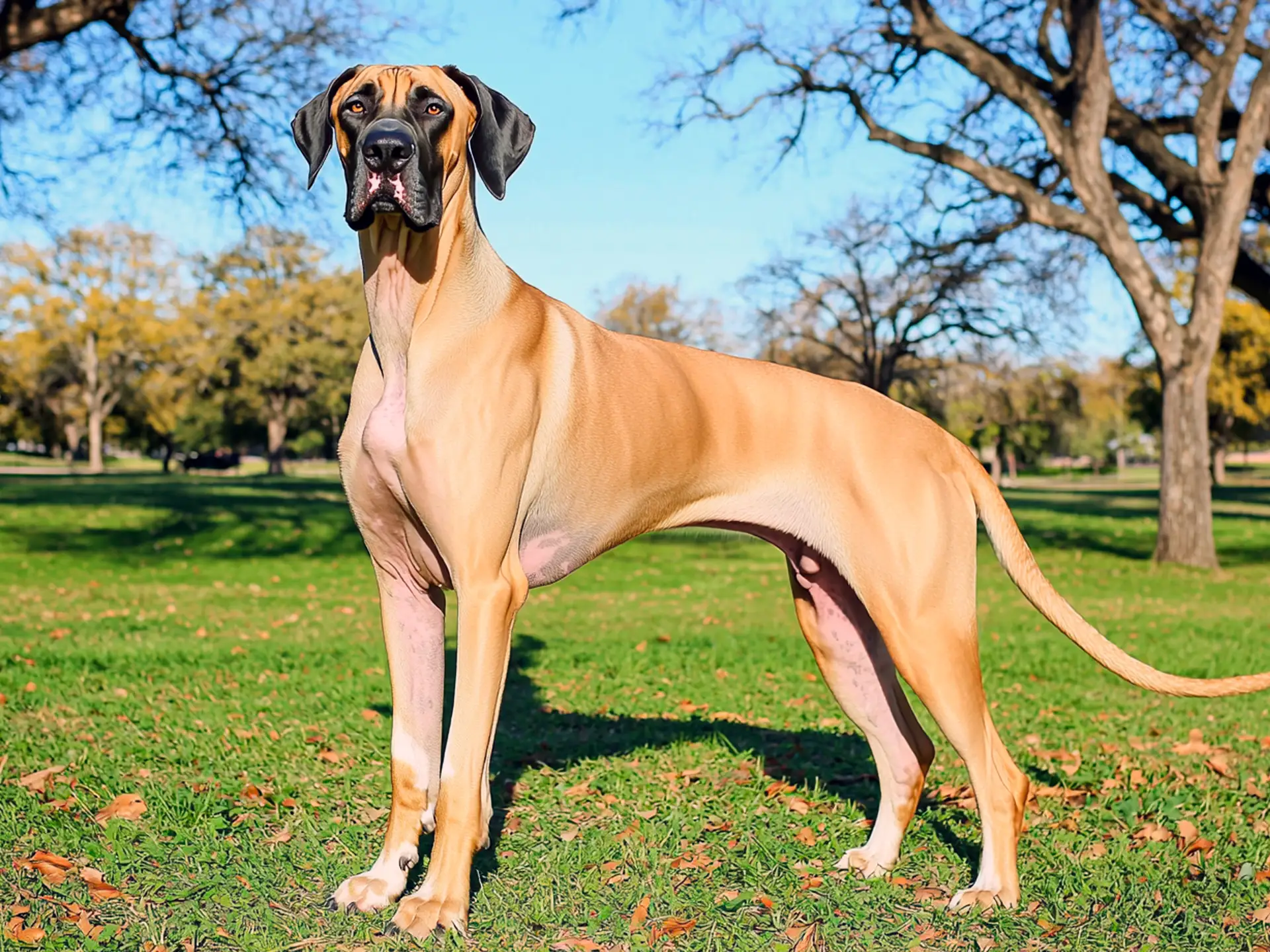
What future Great Dane owners should keep in mind:
- Space: the dog really does need room to lie down and move around without constantly bumping into furniture.
- Joint health: during the first year you need to control weight and avoid too much jumping.
- Emotional climate: Danes are sensitive to your tone of voice and do not cope well with shouting or inconsistent demands.
This breed is suitable for people who are ready for regular walks, calm training, and who understand that great height is not just an impressive look, but also responsibility for every step the dog takes outdoors.
Newfoundland
The Newfoundland is a large dog breed that historically helped fishermen and was used in rescue work. Newfoundlands usually tolerate children’s noise quite well, enjoy physical contact, and do not need constant active play.
Practical points for a Newfoundland owner:
- coat care (regular brushing, especially when shedding);
- weight control to avoid overloading joints and heart;
- close attention to heat: these dogs suffer in hot weather and need shade and water.
If you want a large, soft-natured dog that enjoys going to the forest, the water, and simply living with a family, a Newfoundland can be one of the best options among large dog breeds.
Irish Wolfhound
The Irish Wolfhound is a tall, rough-coated dog that historically herded sheep and hunted wolves. Today it is more often a family companion that combines impressive height with fairly reserved behaviour. Irish Wolfhounds rarely bark “just because”, are not naturally aggressive without a reason, and usually behave well at home.
Anyone who loves large dog breeds should remember that an Irish Wolfhound needs:
- long walks at a calm but not snail-like pace;
- work with prey drive (do not experiment off leash with cats or small animals);
- gentle socialisation in the city, where there is a lot of noise and people.
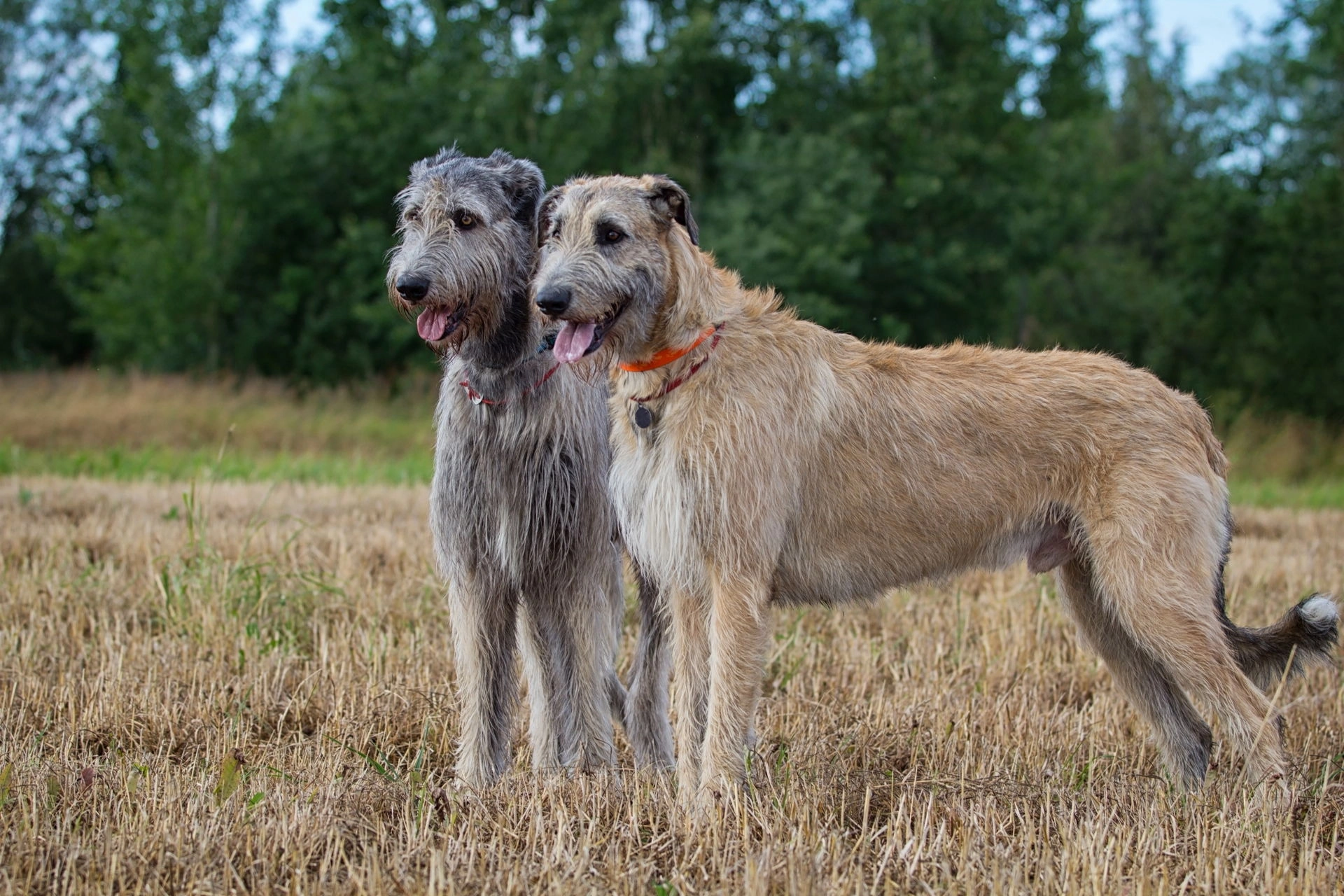
For an active family that enjoys long walks and is ready to train consistently, an Irish Wolfhound can be a very steady and predictable companion.
Deerhound (Scottish Deerhound)
The Deerhound is a tall, slim sighthound bred to hunt deer in rough terrain. The dog looks fairly light, but in terms of height, it definitely counts as a large dog breed. In an apartment, a Deerhound can seem almost invisible – they lie quietly, do not demand constant attention, and do not “drill holes in your head” out of boredom.
At the same time, this is not a pure “sofa” dog. For a Deerhound it is critical to have:
- room to run in safe areas;
- good recall training so prey drive does not take over;
- basic obedience and emotional control in busy urban spaces.
If you are looking for a mix of impressive height, athletic build, and a relatively calm home temperament, a Deerhound can be that compromise. Just remember that without regular physical activity, this breed gets bored quickly.
Dogue de Bordeaux (French Mastiff)
The Dogue de Bordeaux is a heavy, low-set large dog breed with a very massive head. It was once used for pulling loads and guarding, and today it is mostly a family guardian and companion. The Dogue de Bordeaux bonds closely with its family, reads the mood in the home very well, and is usually calm in familiar surroundings.
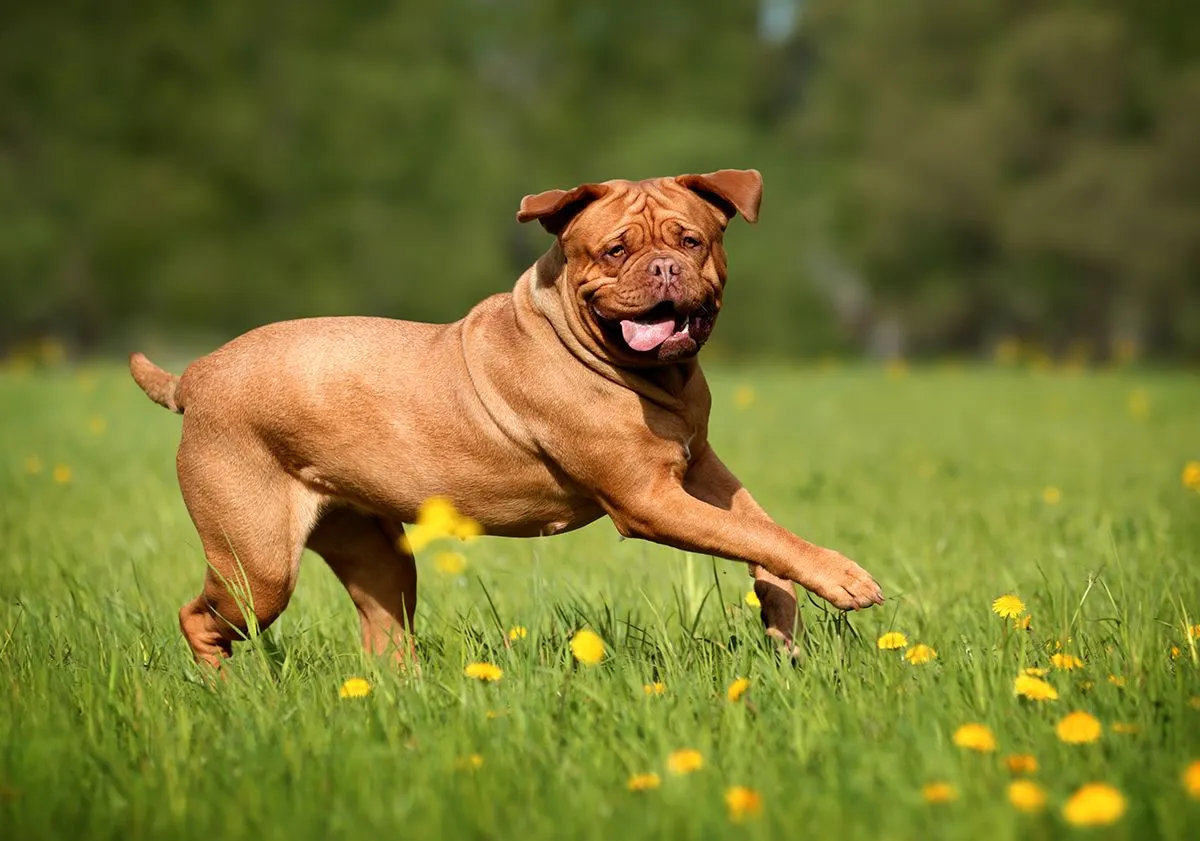
Key points for keeping this breed:
- they tend to gain weight easily, so diet needs to be controlled;
- early socialisation is important so natural wariness of strangers does not turn into uncontrolled aggression;
- physical exercise should be regular but without overheating or overloading.
A Dogue de Bordeaux suits people who want a large but not hyperactive dog, are ready to work on training, and understand that “guard dog” is not automatic – it is the result of consistent work with the dog’s character.
Tibetan Mastiff
The Tibetan Mastiff is an independent, territorial large dog breed that has guarded flocks and buildings in the mountains for centuries. You can recognise it easily by its thick coat and lion-like mane. This is one of the most self-directed large dog breeds – a Tibetan Mastiff often decides on its own what counts as a threat and is not always eager to follow commands blindly.
Who should seriously think twice before choosing a Tibetan Mastiff:
- families with no experience of large guarding breeds;
- people who want a “soft, cuddly” dog and are not ready to set clear rules;
- those who do not have a fenced yard and enough time for socialisation.
With the right approach, a Tibetan Mastiff can be a reliable guardian and calm companion for its family. But this is definitely not a “no-strings-attached” dog.
English Mastiff
The English Mastiff is not just a large dog breed – it is one of the heaviest breeds, with some individuals weighing more than 100 kilograms. At the same time, most Mastiffs at home are fairly phlegmatic: they like calm walks, enjoy lying next to their people, and rarely “put on a show” without a good reason.
Living with an English Mastiff in short:
- you need enough space for a very large dog indoors
- basic obedience should be taught while the dog is still a puppy and you can physically handle them
- you must watch the dog’s weight and not turn them into a permanent “heavyweight couch potato”
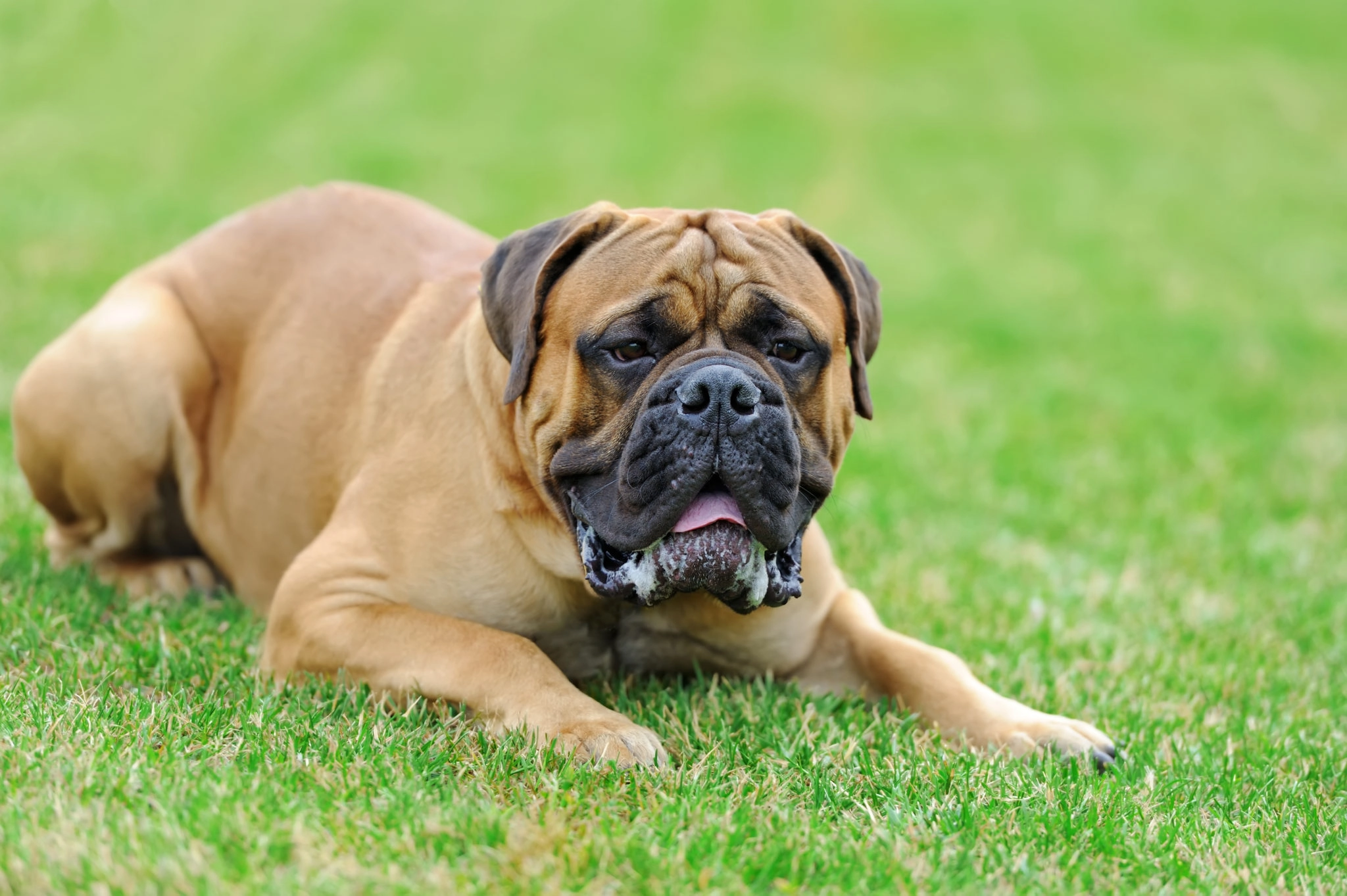
This is a good option for people with a calm lifestyle who are ready for the size and do not expect lightning-fast reactions or sports records from their dog.
Boerboel
The Boerboel is a South African guarding dog, a large dog breed created to work in tough conditions. It combines a muscular build, high working capacity, and a strong protective instinct. The owner’s experience and readiness to train systematically play a key role with this breed.
A Boerboel may suit:
- people who have already had large working or guarding dogs
- owners of private houses who can dedicate time to training
- those who are ready to work with a professional trainer instead of improvising
A Boerboel is not a good fit for:
- complete beginners in dog ownership
- anyone looking for a soft, plush companion that “does not need training”
- families where there is no agreement on rules for keeping a dog
With the right approach, a Boerboel can be very loyal, manageable, and effective as a guard. In inexperienced hands, that same power can become a serious problem.
Saint Bernard
The Saint Bernard is a large dog breed well known from films and photos of the Alps. It is a big, massive dog with a kind, open expression, historically used in mountain rescue work. In everyday life, Saint Bernards are usually calm, patient, and family-focused. They tolerate cold well but struggle in heat.
What to keep in mind:
- regular coat and skin care
- planning walks to avoid overheating in summer
- early training so an adult Saint Bernard does not behave like an “uncontrolled teenager in a giant body”
This breed is for people who are ready for a very large dog, are not afraid of drool on clothes, and understand that a Saint Bernard’s kindness does not cancel the need for clear rules.
Leonberger
The Leonberger is a large dog breed developed in Germany to combine a “lion-like” appearance with working abilities. Today Leonbergers are used in rescue work, as draft dogs, and as family companions. They usually get along well with children, gladly join in family activities, and keep a stable temperament when properly socialised.
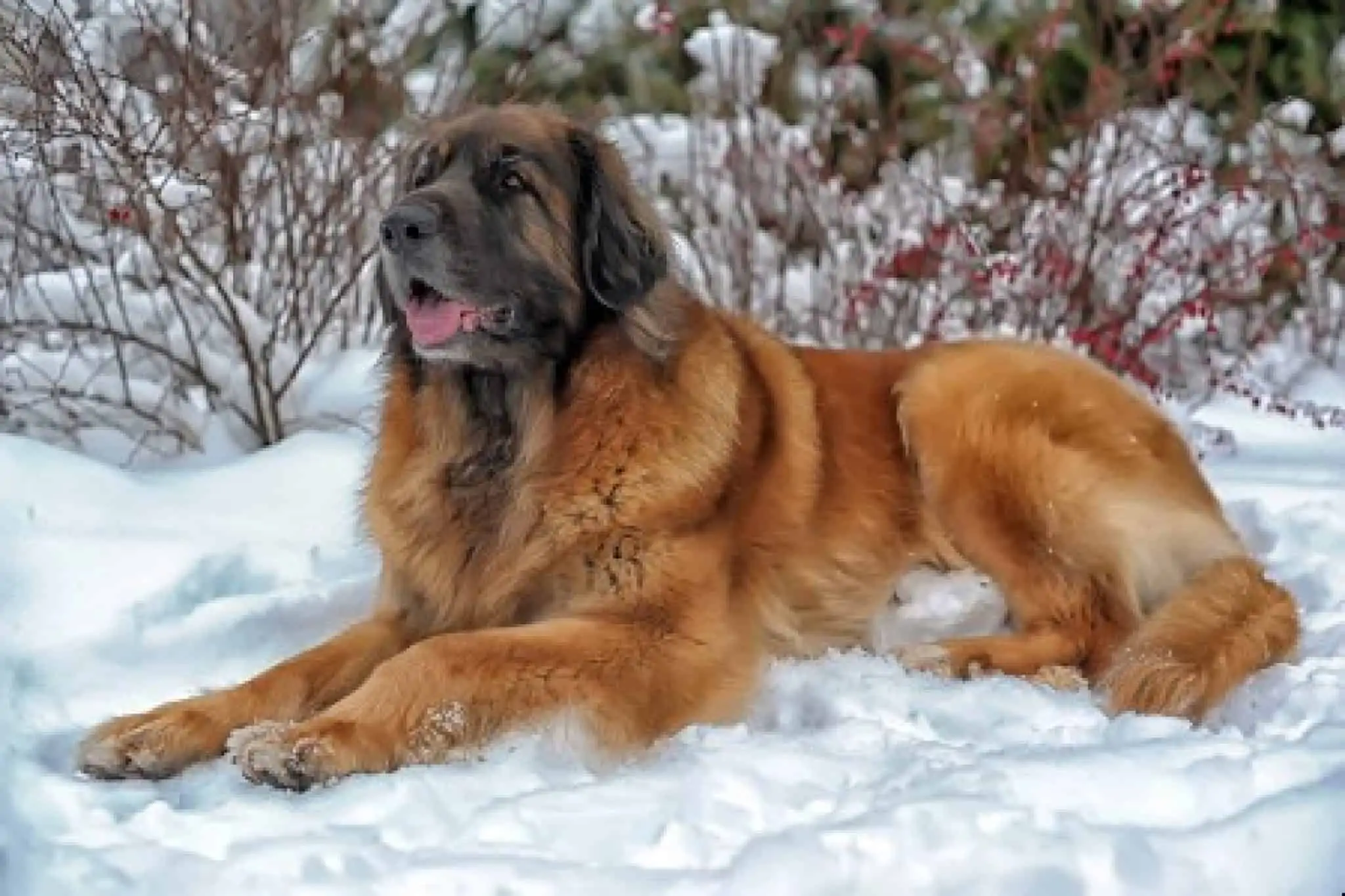
In practice this means:
- lots of shared walks and activities
- consistent obedience training
- regular coat care, especially during shedding season
A Leonberger is a good match for people who genuinely want to include a dog in family life, not leave them “on their own” out in the yard.
How to Tell If You Are Ready for a Large Dog Breed
Before choosing a specific breed, it is worth answering a few honest questions. Key signs that you are ready:
- you truly have time for daily walks longer than 5–10 minutes
- you are ready to learn together with your dog and, if needed, work with a trainer
- other family members support the idea of a large dog breed and are ready to follow the same rules
- you understand that food, vet care, and equipment will cost more than they would for a small dog
Large dog breeds are always about partnership and a long-term commitment. If you are ready for that, size stops being a problem and becomes one of the advantages – you get a genuinely big friend you can plan years of shared life with.
Frequently Asked Questions About Large Dog Breeds
Yes, many large dog breeds can live comfortably in an apartment if they get enough walks, mental stimulation, and are not constantly disturbed in their own space. The key factor is not so much square metres as your willingness to go outside every day, work with your dog, and keep basic rules of behaviour at home.
On average, adult large dog breeds need about 1.5–2 hours of active walking per day, split into two or three outings. Part of that time can be calm walking, and part should include more active movement, exercises, and games. For puppies and senior dogs, the load should be adjusted based on age and health.
No. Size can be intimidating, but real guarding ability depends on the dog’s nervous system, genetics, socialisation, and training. An untrained, unstable large dog without clear rules can be dangerous both to strangers and to its own owners. For guarding, you need not just any large dog breed, but dogs from stable lines, and you must train them properly.
In most cases, costs will be higher than for a small breed – more food, more expensive parasite treatments (they are dose-based by weight), stronger equipment, and regular preventive checkups. At the same time, with sensible planning these are predictable expenses rather than constant surprises.
Basically, from the first day the puppy comes home. At 8–10 weeks you can already build basic habits, introduce the leash, teach simple cues, and show household rules. The period up to about 4 months is especially important for socialisation, and how you use this time will strongly influence what your adult large dog will be like.