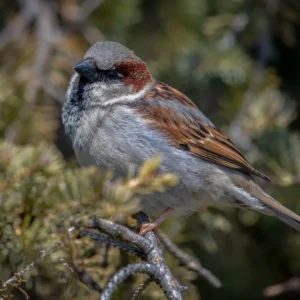




The sparrow is a bird most of us see every day and hardly notice. It hops around benches, picks up crumbs near kiosks, hides in bushes in the yard, and sits on wires above the road. It feels like these little birds have always been around and always will be, but research shows that in many cities their numbers are going down.
This familiar bird actually tells a lot about what is happening to the environment. This article brings together 15 short but really unexpected facts about sparrows – about their life in cities, food, nests, diseases, and dependence on people. They help look at this well-known neighbor in a completely different way.
Sparrows Around Us: A Bird People Hardly Notice
The sparrow is a small bird that most people see every day. It sits on roofs, looks for crumbs near kiosks, and hops along the pavement at bus stops. In cities the house sparrow is most common, and in greener areas it is more often the tree (field) sparrow. Both species have learned to live next to people and use everything that city and village life creates.
A sparrow makes use of what people provide:
- crumbs of food and grain
- gaps and cracks in houses and other buildings
- trees, bushes, and small lawns
- some protection from certain predators
Because this bird is so familiar, it is easy to overlook how important it is for yards and streets. Sparrows are easy to watch, so ornithologists often use them as a basic species for long-term monitoring. When the number of sparrows in a city changes, it usually means the environment has changed too – there is less greenery, more chemicals, or different types of buildings.
Even within one city, sparrows behave in different ways. The house sparrow is bolder, settles in buildings more actively, and comes closer to people. The tree sparrow more often stays near trees and bushes and prefers greener spots. Even this difference between two related species shows how small birds can react differently to the same conditions.
Where Sparrows Are Disappearing From Towns and Villages
Over the last few decades, sparrow numbers have fallen noticeably in many European countries. For most people, this is not obvious: there are still a few birds in the yard. But when observation data over 20–30 years are compared, it becomes clear that flocks have become much smaller. In some cities, where there used to be dozens of sparrows in every yard, only small groups remain today.
Researchers explain the drop in sparrow numbers as a combination of several factors. The main ones are:
- Pesticides in farming. They reduce the number of insects that sparrows use to feed their chicks.
- Modern construction. New buildings often have smooth façades without cracks and eaves where house sparrows used to nest easily.
- Air and soil pollution. Cities have more dust, exhaust fumes, and industrial waste.
- Shrinking green spaces. Fewer bushes and grassy areas mean fewer natural places to nest and find food.
- Diseases and parasites. In dense city populations infections spread faster.
Ornithologists compare data on sparrow numbers with building maps, information on pesticide use, and maps of green spaces. If adaptable birds like sparrows start disappearing on a large scale, it means changes in the environment are quite deep and affect many species. That is why a drop in sparrow numbers is seen as an important signal for ecologists and city planners.
15 Interesting Facts About Sparrows That May Change How You See Them
Sparrows seem like very simple birds, but their lives are much more interesting than they look at first glance. In cities and villages they behave differently, eat different food, build unusual nests, and react sensitively to changes around them. Below are 15 short but telling facts about sparrows that help better understand this familiar city and village neighbor.
Sparrows Live on Almost Every Continent
Sparrows are found across most of the planet. They can be seen in Europe, Asia, North America, part of South America, and in Australia. The only continent without sparrows is Antarctica. People have deliberately and accidentally brought this bird to different countries, and it quickly settled near towns and villages.
The sparrow’s wide range shows that for this bird the presence of people is more important than untouched wild nature. Where there are houses, roads, warehouses, villages, and cities, there is very often this small bird. It can cope with different climates as long as there is food and places to nest.
Sparrows Are a Common Species Losing Numbers
Worldwide, sparrows are still considered a numerous species. But in some regions their numbers are dropping sharply. This is especially noticeable in several European capitals. In places where sparrows used to be among the main city birds, they are now observed much less often.
The situation with sparrows clearly shows the difference between the global picture and local problems. At the level of a continent, the species can look stable, but in a particular city or country numbers can fall quickly because of specific changes – different types of buildings, heavy use of chemicals, or loss of green spaces. This is an important point when the state of bird populations is assessed: total numbers do not always show what is happening in a specific place.
In Cities Sparrows Let People Come Much Closer
Sparrows in cities and in villages do not behave in the same way. Scientists measure the distance at which a bird flies away when a person comes closer. In cities, sparrows let people approach much more closely. They calmly sit by benches, bins, and outdoor cafés and often do not react at all when people walk past.
A short flight distance shows that city sparrows are used to people always being around and actively take advantage of this. They get access to new food sources – crumbs, fast-food leftovers, and feed for other animals. At the same time, the number of risks grows: traffic, glass, cats, and polluted spots. A city sparrow is always balancing between benefits and dangers.
Urban and Rural Sparrows Can Differ in Size
In some regions, researchers have noticed that city sparrows can differ slightly in size and plumage condition from village sparrows. Often, city birds are lighter and their plumage is less bright or looks more worn. This is linked to a different diet, constant stress, and pollution in the city environment.
These differences show that urbanization affects not only sparrow numbers but also their physical condition. In villages, birds eat more natural seeds and insects; in cities, they mix “wild” food with human leftovers. On top of that come noise, constant traffic, and fewer good nesting places. All this together creates other living conditions that can be seen on the birds themselves.
The Male’s Black “Tie” on His Chest Is More Than a Spot
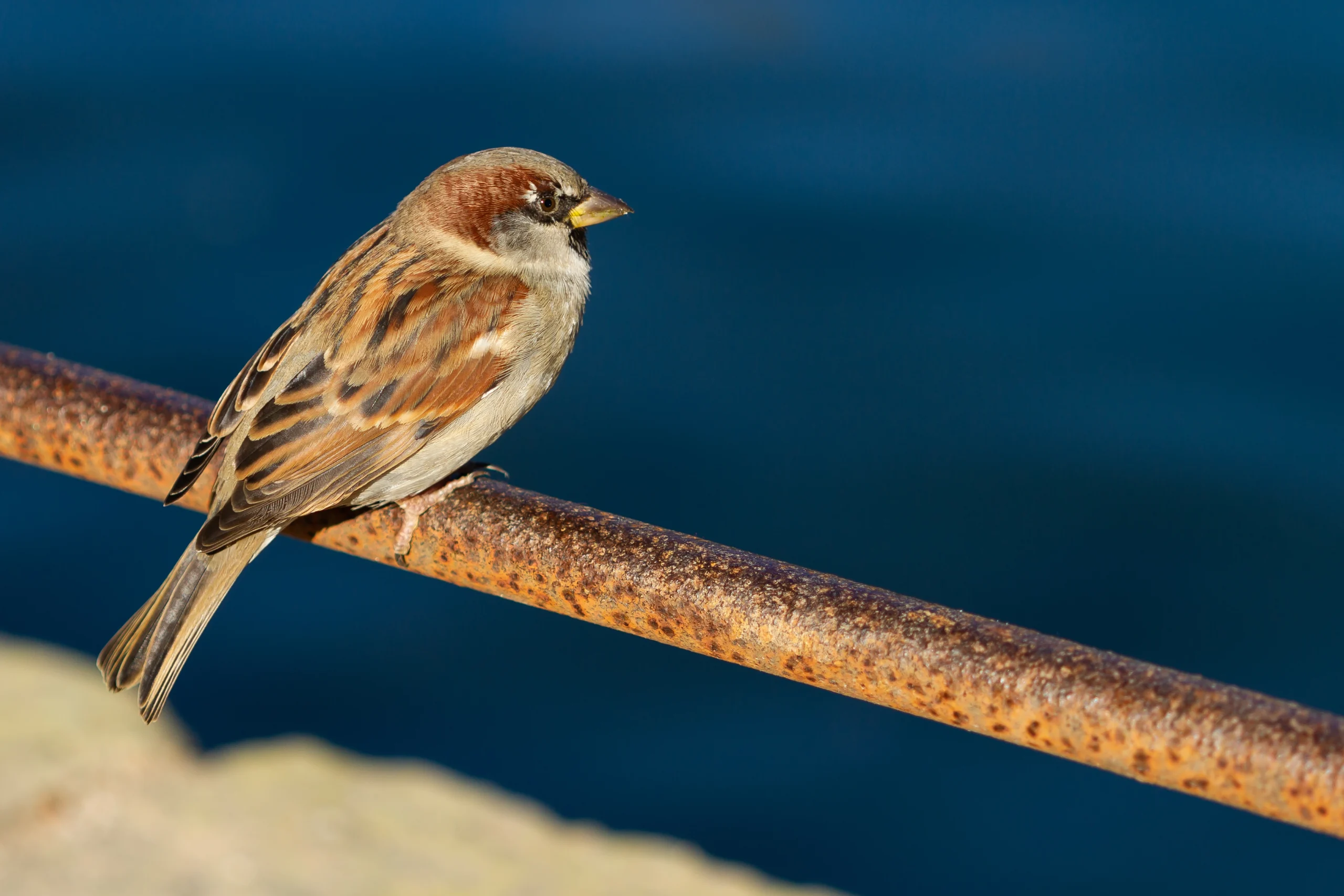
The male house sparrow has a dark patch on its chest that people often call a “tie.” For a long time it was believed that the bigger this patch, the higher the bird’s status in the flock. Such a male was thought to be stronger, more experienced, and more likely to get the best nesting place and attract a mate.
New studies have shown that the link between the size of this patch and status is not always direct. Many factors affect how birds behave – age, health, experience, and even the situation in a particular group. Still, the “tie” remains an important visual feature. It makes it easy to tell males apart.
When Nesting Places Are Scarce Sparrows Can Harm One Another
Modern cities do not offer many convenient places to nest. These include eaves, holes under roofs, and cavities in walls. When there are not enough such spots, competition between pairs becomes stronger. There are documented cases where sparrows threw other pairs’ eggs out of shared nesting cavities to free up space for their own clutch.
This behavior is not the norm for every colony, but it clearly shows how serious the shortage of nesting sites can be. A small hole in a wall or a cavity in a tree becomes a resource birds are ready to fight for in any way they can. For ornithologists this is another argument for keeping at least some potential nesting places when buildings are renovated.
Sparrows Build Complex Nests With a Side Entrance
Some sparrows build quite large nests. From the outside they look like a ball or oval made of grass, twigs, straw, paper, and other light materials. Inside there is a small soft “cup” where the eggs and chicks lie. The entrance is often on the side, so rain and wind get inside less.
A sparrow uses whatever it finds nearby for its nest. In the countryside this is mostly natural materials; in cities it also uses bits of packaging, threads, and small pieces of fabric. In this way the bird adjusts to what people create around it. The main goal stays the same: to make a place that is dry, warm, and relatively safe for raising chicks.
Human Buildings Are Ready-Made Homes for Sparrows
For the house sparrow, a building is not only a source of food but also a potential nesting place. The bird gladly uses:
- cracks under roofs
- holes in walls
- ventilation shafts
- cavities in road signs and streetlights
- gaps under building cladding
On the one hand, this helps the species survive in cities. On the other hand, it makes sparrows dependent on building style. When old houses full of cracks are replaced by new, sealed façades, the number of potential nesting places in a city drops sharply. This factor is often underestimated, but it strongly affects how many birds live in a district.
House and Tree Sparrows Are Not the Same Bird
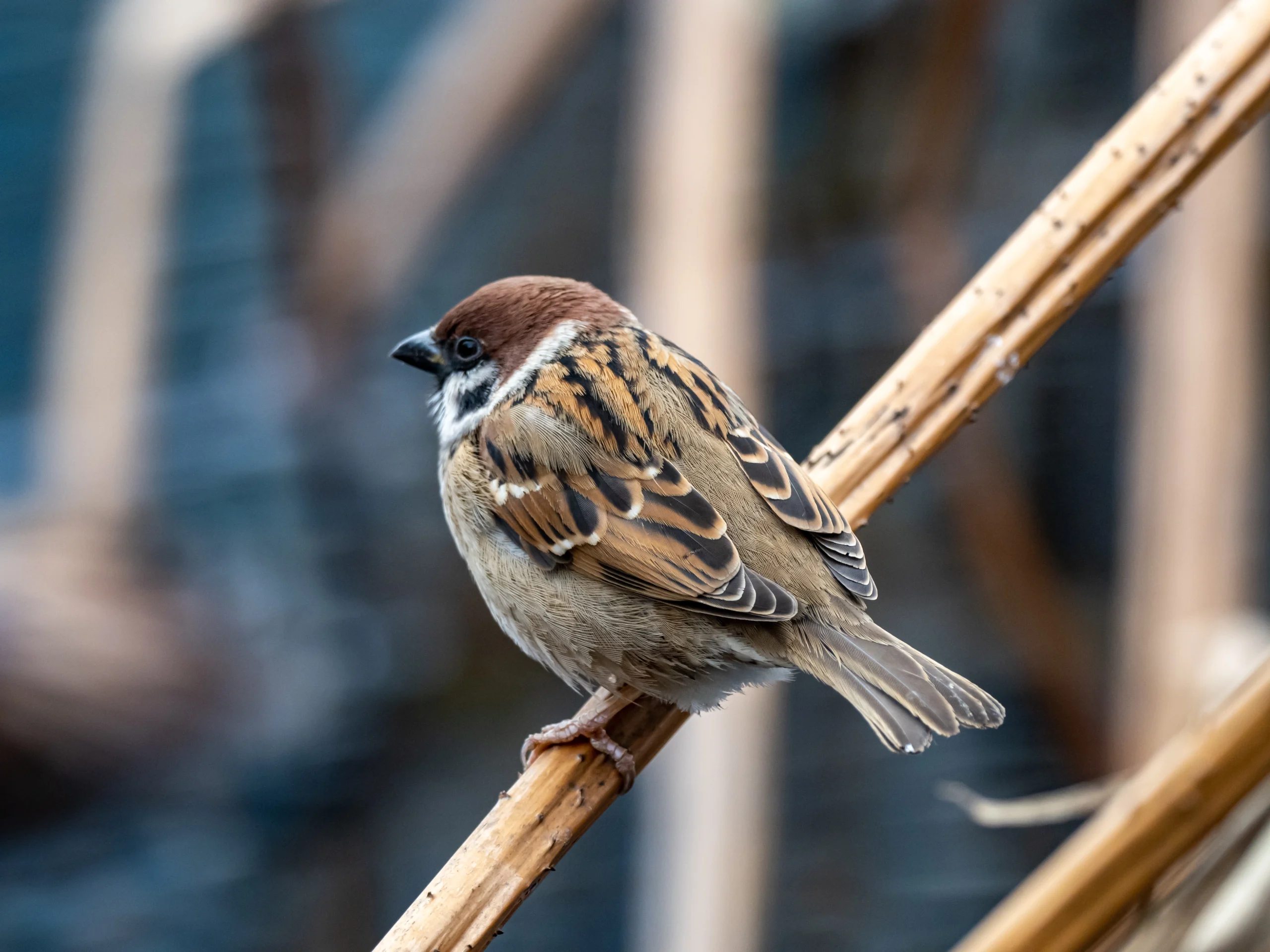
Most people call several species “sparrow” at once. In reality, the two most common are the house sparrow and the tree (field) sparrow. The house sparrow more often lives in dense city neighborhoods; the tree sparrow prefers gardens, parks, village edges, and fields. The tree sparrow has a reddish-brown “cap” on its head and a dark spot on its cheek; the house sparrow has different head and chest colors and patterns.
Their behavior is different too. The house sparrow more actively occupies buildings and man-made structures. The tree sparrow more often looks for natural cavities in trees or old structures with wooden parts. For someone watching birds this is a good reason to look at familiar sparrows more closely and notice differences that were easy to miss before.
A Sparrow’s Life Is Usually Short but Records Happen
In the wild, a sparrow usually lives only a few years. It constantly faces predators, harsh winters, food shortages, diseases, and other challenges. But thanks to bird ringing, it is known that some individuals can live much longer if conditions are good. These cases are rare, but they show the species’ potential.
How long a sparrow lives depends on the quality of the environment where it lives. If there is enough food, safe nesting places, and moderate pressure from predators and diseases, the chance of living longer increases. In cities, some threats become weaker, but others appear – traffic, glass, and chemical pollution. The balance of these factors determines the real average age of sparrows in each place.
For Sparrow Chicks Insects Are Especially Important
Adult sparrows eat seeds for most of the year. These can be seeds of weeds, crops, ornamental plants, and in cities also leftovers of people’s food. But when there are chicks in the nest, things change. Parents start actively looking for insects, spiders, and other small invertebrates – they give chicks the protein they need to grow quickly.
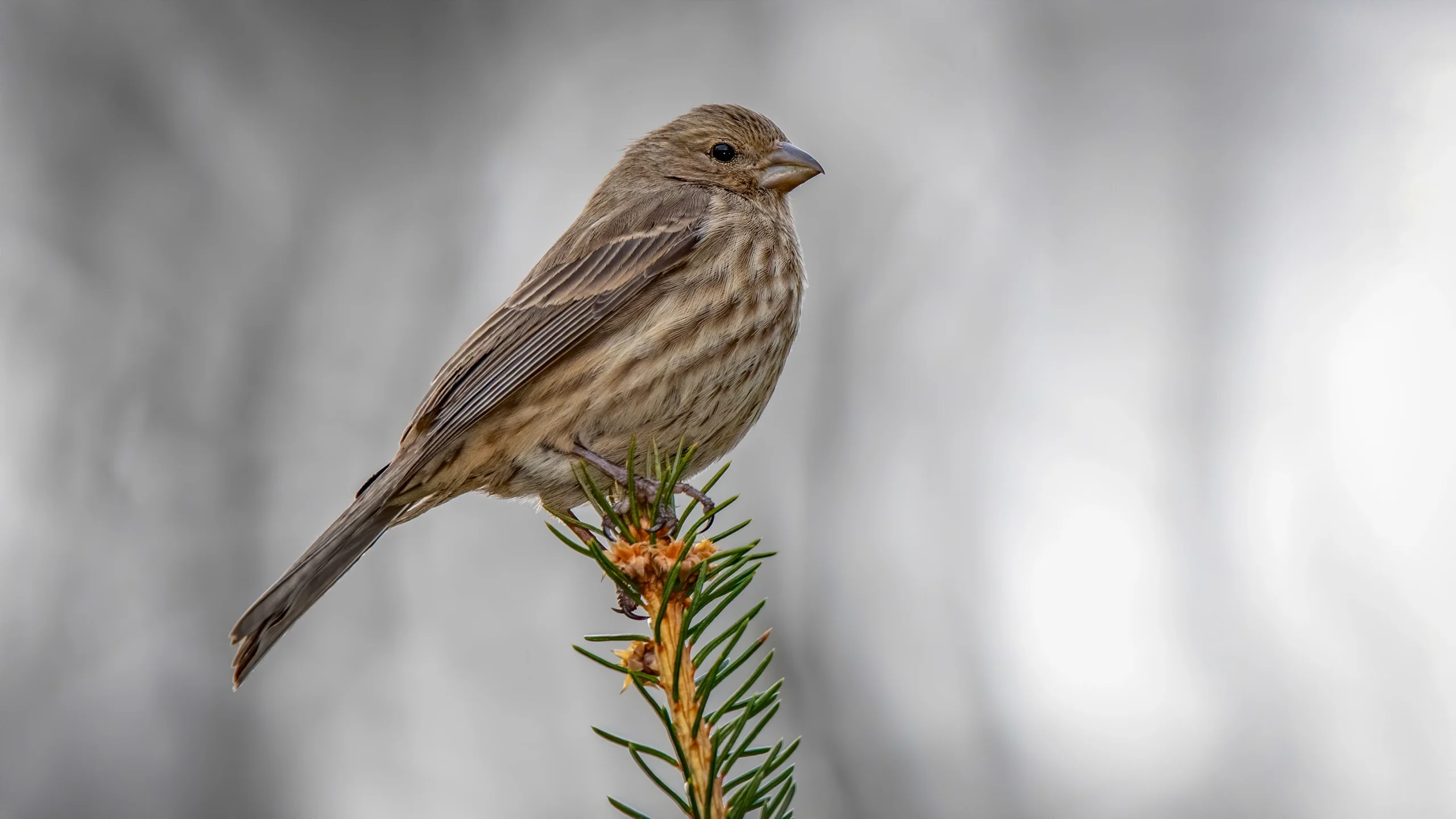
If there are few patches of natural vegetation with insects near the nest, it becomes hard to raise a healthy brood. The parents have to fly farther and spend more time and energy searching for food. Because of this, some chicks may not survive. That is why sparrows need not only buildings and roads but also strips of grass, bushes, and other green islands among concrete.
Heavy Metals and Toxins Can Build Up in a Sparrow’s Body
A sparrow living near a busy road or industrial area constantly contacts polluted dust, soil, and plants. Together with food, particles of lead and other heavy metals can get into the bird’s body. This concerns both seeds and insects that crawl over contaminated surfaces.
A higher content of toxic substances can affect a sparrow’s health and behavior even if it looks normal from the outside. For ecologists, analyzing bird tissues is a way to assess pollution levels in an area. Sparrows are well suited for such research because they live close to people and constantly interact with the local environment.
In Dense City Populations Diseases Spread Faster
In cities, many sparrows gather in small areas: near bins, feeders, markets, and places where many people are. Frequent contact between birds creates conditions for diseases and parasites to spread quickly. In some cities, scientists link the drop in sparrow numbers to a range of illnesses that are easier to spread in exactly such conditions.
When a population is weakened by pollution, lack of food, and stress, its resistance to diseases decreases. As a result, even common infections can lead to a noticeable fall in bird numbers. This once again shows that sparrows are affected not by a single factor but by a whole set of conditions that together determine their chances of survival.
Changes in Sparrow Numbers Help Show a City’s Condition
Because sparrows live close to people and react to chemicals, building styles, and the structure of green spaces, they have become one of the key species for monitoring city environments. Specialists regularly count birds in different districts, compare data over years and decades, and link them to building plans and land use.
When sparrow numbers in a city change, it almost always means the environmenthas changed too. If there are fewer birds even in places where they used to be very numerous, this is a signal that conditions are getting worse for many species. That is why information about sparrows is part of long-term programs that track biodiversity.
The History of Our Attitude to Sparrows Gives Important Ecological Lessons
In folk culture in different countries, the sparrow often symbolizes an ordinary, simple bird. It appears in tales and sayings and is described as an undemanding yard dweller. In the past there were also campaigns against sparrows, when they were called pests and killed in large numbers. Later this led to a rise in plant-eating insect numbers and new problems for crops.
Such stories are a reminder that interference in the lives of even very familiar species can have unexpected consequences. Today, sparrows are seen as an important part of city and village ecosystems. The experience of past campaigns shows that decisions about wild species need to take all ecological links into account, not just short-term interests.
What an Ordinary Sparrow Says About the Environment
The sparrow is one of the most noticeable birds near people, but it is rare to stop and think about what its life shows. Changes in numbers, behavior, diet, and health of this species reflect how towns and villages, farming, and pollution levels are changing. When it becomes harder for sparrows to live next to people, it means the environment is getting worse for many other species as well.
Watching sparrows does not require special knowledge. It is enough to pay attention to how many birds are in the yard, whether their calls are heard, and whether nests are visible on buildings. Such simple observations help better understand what is happening with the environment exactly where people live and not lose contact with nature, even in a big city.
Answers to Common Questions About Sparrows
Sparrows eat some insect pests and their larvae. They also eat weed seeds and help slow their spread. Their numbers can be used to get a rough idea of the state of urban and rural environments.
In the wild, most sparrows live about 3–5 years. Many chicks die in the first years because of predators, diseases, and lack of food. Some ringed birds can live 10 years or more, but that is rare.
In many cultures, sparrows symbolize simplicity and everyday life. They are linked with being undemanding, quick, and able to survive in tough conditions. Sometimes a sparrow stands for a “little person” living next to big events.
Sparrows mostly live next to people – in villages, towns, and on the edges of fields. They choose places with buildings, farm structures, gardens, and areas with bushes. In natural landscapes without human settlements, sparrows are much less common.
Numbers of some insects and weed seeds that sparrows eat will grow. This can change the balance in city and village ecosystems and affect other bird species. The disappearance of sparrows would be a sign that the environment has become too harsh even for the most adaptable species.