



Comedones are one of the most common reasons people visit a dermatologist or cosmetologist. They appear in both teens and adults, and you’ll see them on oily and combination skin, and sometimes even on normal skin. The good news is that comedones respond well to treatment when you work not only on the surface of the skin, but also on the causes behind them.
Many people call any black dots on the nose or small bumps on the cheeks “comedones” and try to squeeze them out. The result is redness, painful nodules, and spots or small scars afterward. To avoid this, it’s important to understand that comedones are a specific type of skin lesion, different from pimples, sebaceous filaments, milia, or fungal folliculitis.
In this article, we explain what comedones are, how closed and open comedones differ, why they appear, how to care for them safely, and when you need a doctor instead of another social-media mask.
What Comedones Are and Why Almost Everyone Has Them
Comedones are plugs inside the opening of a hair follicle. They form from thick sebum, dead skin cells, and impurities like dust or leftover makeup. Normally, sebum protects and moisturizes the skin, and dead cells shed invisibly. When this process breaks down, a dense mass forms inside the pore and blocks the exit. That’s how comedones appear.
Comedones aren’t “dirt in the pores”. They’re the result of internal skin processes. Sebum composition, the speed of cell turnover, the activity of sebaceous glands, and hormonal balance all influence whether comedones will form.
Why does it feel like everyone has comedones? The skin of the face, back, chest, and shoulders has many sebaceous glands. Where there are more glands, the pores are wider, and the risk is higher. That’s why open comedones are more visible in the T-zone (nose, center of the forehead, chin), and closed comedones often appear on the cheeks, forehead, and lower face.
Important: having a few comedones doesn’t mean you have severe acne. It can be a skin trait you can manage with proper care. But if comedones spread, turn into painful nodules, or become pus-filled lesions, it’s time to see a dermatologist.
Closed and Open Comedones: How to Tell Them From Pimples and Other Spots
Dermatologists highlight two main types: closed comedones and open comedones. They come from the same process, but they look and behave differently.
Closed comedones are small bumps in a skin-colored or white shade that rise slightly above the surface. The pore content doesn’t come in contact with oxygen, so it stays white. The skin feels uneven or bumpy to the touch, especially on the cheeks, forehead, and lower face. People often describe closed comedones as “those tiny white bumps under the skin”.
Open comedones are the classic black dots inside pores. Their content is also white or yellowish at first, but when it meets oxygen, oxidation happens and the top turns dark. So open comedones look like dark centers without redness or pain.
To avoid confusing comedones with other issues, here’s a short cheat sheet.
How to Tell Comedones From Other Skin Conditions
| Skin element | How it looks | Sensation | What it may be |
| Black dot in a pore | Flat or slightly raised, dark center | Usually painless | Open comedones |
| White or skin-colored bump | Like a tiny grain under the skin, no redness | Rough surface, no pain | Closed comedones |
| Red painful pimple | Red, swollen, sometimes with pus | Hurts when touched | Inflammatory acne (papules, pustules) |
| Many identical bumps | Dense “clusters”, strong itching | Itching, burning | Fungal folliculitis |
| Very small gray-yellow dots | Smooth to the touch | No discomfort | Sebaceous filaments (normal, not comedones) |
| Firm “grain” under the skin | Whitish kernel, not squeezable | Painless but noticeable | Milia (small keratin cysts) |
The main difference: comedones themselves are not inflammatory. They’re not red and don’t hurt. Problems start when infection enters a comedone and turns it into an inflamed, painful acne lesion.
Sebaceous filaments, which many people mistake for open comedones, are channels that carry sebum to the surface. They’re lighter, don’t rise above the skin, and are a normal part of skin physiology. Comedones are denser, darker, and clearly raised.
Why Comedones Form: Main Causes and Triggers
Comedones form when two processes overlap: the skin produces too much sebum, and the outer layer of the epidermis sheds incorrectly. A thick mass builds up inside a narrow follicle opening and turns into comedones.
Many factors influence this:
- Hormonal changes. Androgens stimulate sebaceous glands. In puberty, certain days of the cycle, during pregnancy or menopause, comedones can appear more often.
- Wrong skincare routine. Poor cleansing, sleeping in makeup, or harsh products that dry the skin can trigger both hyperkeratosis and excess sebum production.
- Comedogenic cosmetics. Heavy foundations, oily formulas, certain oils and waxes can physically clog pores and cause new comedones.
- Diet and lifestyle. Too much sugar, refined carbs, foods with a high glycemic index, and a lot of dairy can be an additional trigger.
- Stress and lack of sleep. High stress hormones affect sebaceous glands, and disrupted sleep reduces skin’s ability to repair itself.
- Health conditions. Thyroid issues, adrenal disorders, digestive problems, and long-term use of hormonal drugs, anabolic steroids, or some antibiotics can show up as comedones.
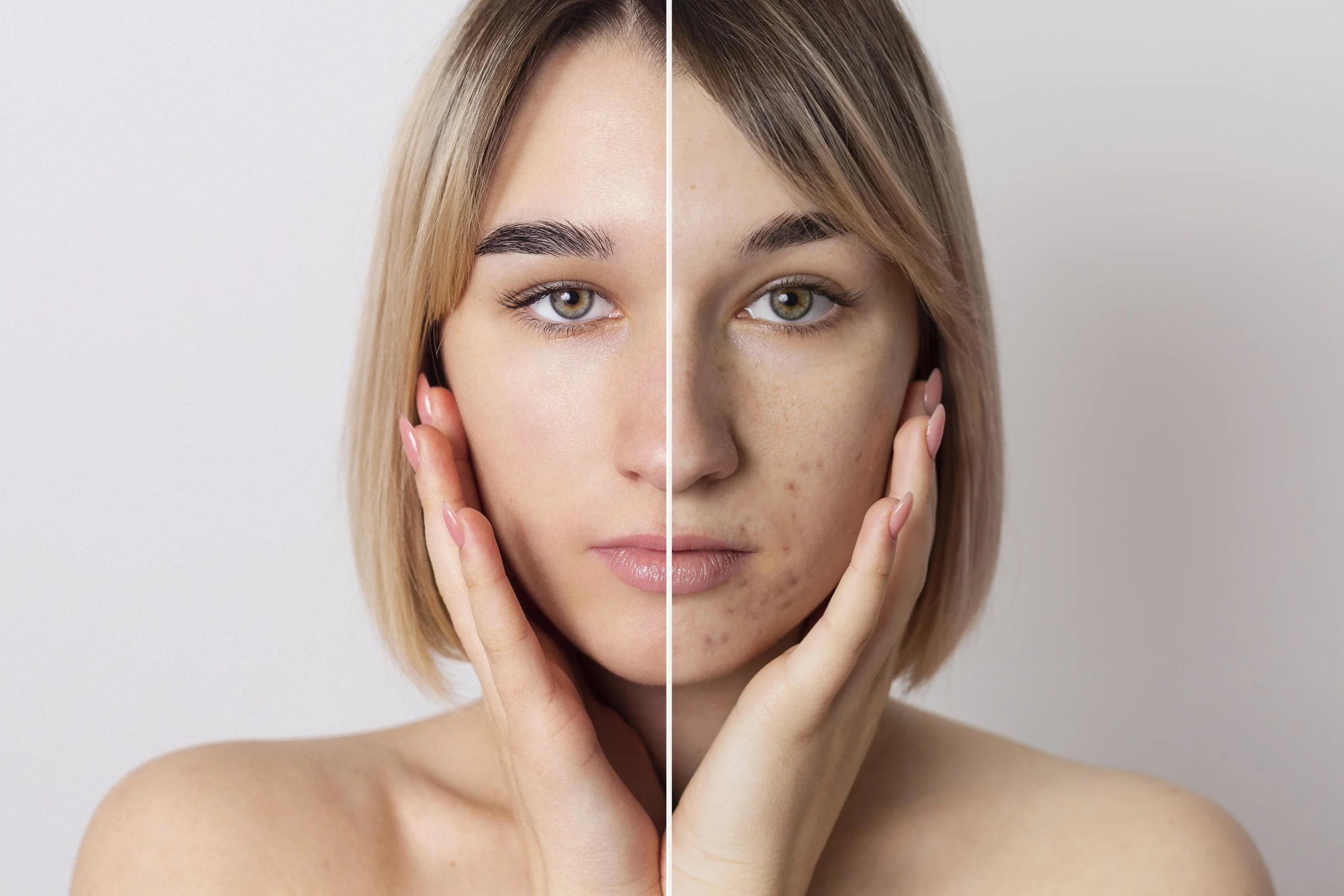
Comedones are a signal: the skin lacks balance between cleansing, renewal, and protection. It’s hard to isolate one cause, but changing several habits at once is realistic: gentle cleansing, proper makeup removal, simpler formulas, and a steady sleep schedule noticeably improve skin with comedones.
How to Safely Treat Open Comedones
Open comedones are the black dots most visible on the nose and in the T-zone. They look “simple”, so people usually try to squeeze them at home. In reality, squeezing stretches the pore, injures the skin, and increases the risk of inflammation.
To reduce open comedones, three care directions matter.
- Regular gentle cleansing. Double cleansing in the evening works best: first a formula that dissolves makeup and sunscreen (cleansing oil or balm), then a gentle gel or foam. This removes the day’s buildup without drying the skin.
- BHA acids and salicylic acid. Salicylic acid is oil-soluble, so it can get inside the pore, loosen thick buildup, and gradually “free” comedones. You’ll find it in toners, serums, and cleansers. Follow product directions and avoid mixing too many acids at once – your skin needs time to recover.
- Clay masks and absorbents. Clay and charcoal masks help pull excess sebum and impurities from the surface. It’s better to use them on targeted areas where open comedones are most noticeable. Don’t let the mask fully dry – mist it with water or toner as it sets.
Results take time. Skin usually needs one or two renewal cycles (4–8 weeks) for a new routine to settle in and for comedones to noticeably fade.
How to Treat Closed Comedones and Prevent Inflammation
Closed comedones are trickier. You don’t see them from a distance, but you feel them when you run your hand over your skin. These are the ones that often turn into painful, inflamed spots when bacteria get inside. So the approach needs to be careful and consistent.
Here’s what typically helps with closed comedones:
- Professional surface and medium peels. Glycolic, lactic, and mandelic acids help exfoliate the top layer, soften plugs, and smooth skin texture. These procedures should be done by a dermatologist or a trained medical cosmetologist, depending on your skin.
- Home products with AHA and BHA acids. In lower concentrations, acids are added to at-home serums, lotions, and creams. You introduce them gradually, watch how the skin reacts, and combine them with hydration and sunscreen.
- Enzyme exfoliation. For sensitive skin that reacts to acids, enzymes are a gentler way to help skin cells shed on time.
- Retinoids. Vitamin A derivatives work on two mechanisms at once: they regulate cell turnover and reduce sebum production. A dermatologist may prescribe topical retinoids for noticeable comedones or comedonal acne. Treatment requires supervision, slow dose adjustment, and daily SPF.
One more point is mechanical extraction. Manual or device-assisted extraction done by a professional can be part of the plan when comedones are dense and numerous. But extraction alone is not the answer. Without changing home care and addressing the causes, new closed comedones will appear.
Skincare Routine for Comedone-Prone Skin: Step by Step
To reduce comedones instead of creating more, the skin needs a stable routine – not a cycle of drying it out and then “sealing” pores with heavy textures. It helps to have a clear basic routine, and add treatment products on top when needed.
Basic Daily Routine for Comedones
| Time | Step | What to use | Notes |
| Morning | Cleansing | Gentle gel or foam | No harsh surfactants, no “squeaky clean” feel |
| Toning | Alcohol-free toner with soothing ingredients | Helps balance pH and reduce discomfort | |
| Treatment | By doctor’s advice (acids, niacinamide etc.) | Don’t mix too many actives at once | |
| Moisturizing | Lightweight cream or emulsion | Non-comedogenic formulas, no heavy oils | |
| Sun protection | SPF cream | Essential with acids and retinoids | |
| Evening | Cleansing 1 | Cleansing oil or balm | Especially important with makeup and SPF |
| Cleansing 2 | Gentle gel or foam | Removes oil residue and buildup | |
| Treatment | Acids, retinoids, or enzymes | On different days based on sensitivity | |
| Moisturizing | Cream or gel | Prevents rebound oiliness |
You can also use targeted products – for example, clay masks or formulas with zinc, niacinamide, or single acids. The key is to introduce them slowly, not use everything at once.
Habits that make comedones worse and trigger new ones:
- squeezing comedones at home;
- rough scrubs with large particles;
- washing with hot water or alcohol lotions;
- heavy makeup that isn’t fully removed;
- touching your face throughout the day.
The less trauma and dryness the skin experiences, the lower the risk that comedones will turn into painful, inflamed spots.
What Happens If You Don’t Treat Comedones and When to See a Doctor
If you leave comedones “as they are”, hoping they’ll go away on their own, the opposite can happen. A closed comedone often grows, the follicle wall stretches, and conditions form for fast bacterial growth linked to acne.
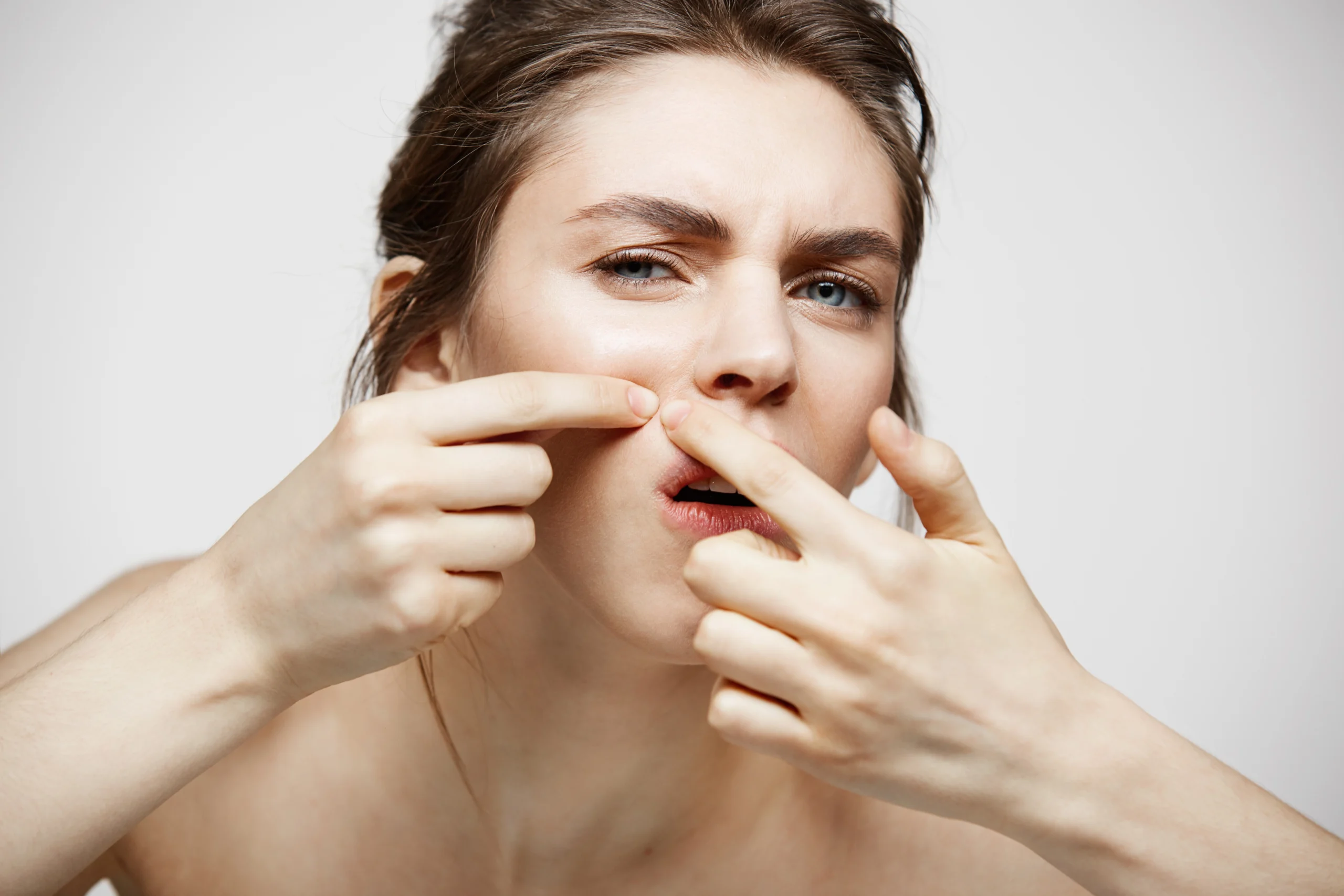
Possible outcomes of untreated comedones:
- shift from a non-inflamed form to papulopustular acne;
- pain, swelling, and redness where closed comedones used to be;
- risk of scars and post-acne marks that are harder to correct;
- stretched pores and long-lasting uneven skin texture.
You should see a dermatologist if:
- comedones cover large areas of your face, back, or chest;
- painful breakouts appear on top of comedones;
- months of at-home care with acids and gentle cleansing made little difference;
- you have other symptoms like hair loss, cycle changes, sudden weight changes, or digestive problems.
The doctor will assess your skin type, the form of acne (comedonal, inflammatory, or mixed), and if needed, recommend tests with an endocrinologist or gastroenterologist. They’ll create a treatment plan. Taking strong medications on your own or using retinoids without supervision can do more harm than good.
Comedones Under Control: What Actually Helps
Comedones don’t appear overnight, and they don’t disappear instantly. They come from a long-term imbalance in sebum production, cell shedding, and daily skincare habits. What really helps keep comedones under control:
- A stable daily routine. Gentle cleansing, light hydration, and sunscreen are the base. Without it, active products won’t give the result you expect.
- Regular but careful exfoliation. Acids and enzymes chosen for your skin type help restore normal cell shedding and reduce both closed and open comedones.
- Smart product choices. Non-comedogenic formulas, minimal heavy creams and oils, and attention to foundation ingredients.
- Working on causes. Adjusting diet, sleep routine, and stress levels, and treating endocrine or digestive issues if needed.
- Dermatologist support. If comedones spread, signs of acne appear, or your skin reacts painfully to any product, it’s time to involve a specialist.
Comedones aren’t a “punishment for bad care”. It’s a condition worth treating. The earlier you address the first open and closed comedones, the higher the chances of clearing them without marks.
FAQ About Comedones
If you remove every cause, theoretically they can disappear for a long time. But we can’t fully control hormones, genetics, or skin type. A realistic goal is to reduce breakouts and prevent them from turning into inflamed acne.
No. They’re common in adolescence because of hormonal changes, but adults can have them too.
Rough scrubs with coffee, salt, or crushed pits can scratch the skin and cause micro-inflammation. DIY masks without controlled concentrations often dry the skin out. It’s safer to use ready-made products with a clear formula and instructions instead of experimenting with aggressive recipes from the internet.
Clay helps absorb excess sebum and clean the surface of pores, so open comedones may look less visible. But clay masks don’t treat the causes of comedones and don’t replace acids, retinoids, or other treatment products. It’s a helpful addition, not the main method.
If comedones cover a large area, get inflamed regularly, leave spots or scars, and months of routine changes don’t help, you need a doctor. Also see a specialist if comedones appear suddenly in adulthood, come with other health symptoms, or cause strong emotional discomfort.